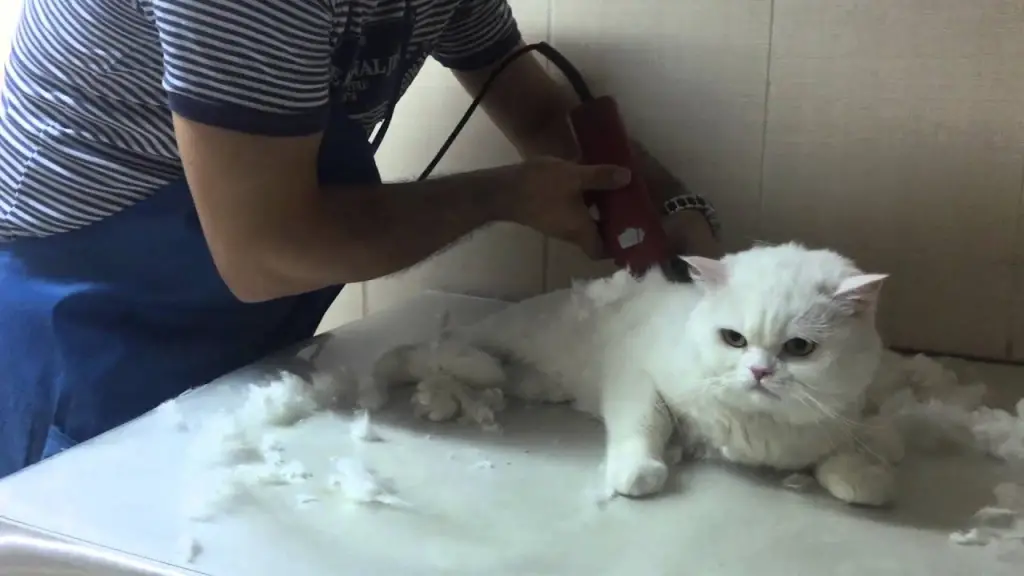
Fleas can be quite a menace, not just to your cat, but to you and your entire household. There are many ways of ridding your cat of fleas. Is shaving it one of these ways?
A cat owner’s worst nightmare comes alive when their pet is infested with fleas. They change everything, and it feels as though you are a squatter in your own home. Fleas multiply almost exponentially, and if they go unchecked, they become a whole new disaster all together.
They are little ninjas that are made to survive even the toughest environments. Their whole bodies are made to make them extremely hardy and evasive. Their heads have many spikes that cause them to attach themselves to the cat’s skin and fur, making their removal very difficult. Their legs are also made to propel them far when they make a leap, and the chances that you are going to catch one, or even see where it lands are quite low, especially because they are quite small.
A cat’s quality of life is adversely affected when it gets a flea infestation. The part that suffers the most is its skin. A flea feeds on the cat’s blood, and it has to bite through the skin to gain access. These tiny bites can be painful and irritating, and you might notice your cat scratching vigorously, chewing at their skin and acting restless every now and then.
Can shaving your cat’s fur eliminate fleas?
Well, technically speaking, the answer is yes. The fleas use that cat’s fur and skin as breeding ground. Seeing that they hate to be in the open, they hide and lay eggs on the fur and skin of your cat. In the absence of the fur, there would be nowhere to hide and nowhere to lay the eggs. They would not allow themselves to live on open skin. So, in a way, yes. Shaving your cat’s fur could potentially rid it of fleas.
But before shaving your cat’s fur, there are a few things to remember. The first and probably most important thing is that your cat’s fur plays a very important role. It has it for a good reason.
So what role does a cat’s fur play?
Thermoregulation
The fur of a cat keeps it from getting too hot or too cold in case of extreme temperature change. In case it is too cold, the inner thick coat traps warm air around the cat’s body and ensures that cold air does not penetrate this layer.
During extremely hot weather, the fur acts as an insulator, once again keeping the hot air out and away from the cat’s body.
Ridding your cat of its fur will do it a lot more harm than good. You are bound to expose it to the effects of harsh weather which include sunburn and frost bite. It would cause it untold discomfort.
Protection
The fur on a cat also acts as a shield against external injury. Cats are naturally inclined toward climbing up high walls and trees, and in so doing, they are prone to injury through scratches and lacerations. The presence of fur keeps them from sustaining such injury as they go about their business.
Beauty
Let us be honest on this one, a clean shaven cat is not exactly fodder for the eyes. The fur of a cat keeps it beautiful and visually appealing. Shaving it means depriving it of this quality.
So what can you do to get rid of fleas in your cat’s fur?
Having established that shaving your cat’s fur is not the best way to eliminate fleas, let us look at some of the best methods you can use to get rid of them.
Using cat shampoos
There are many brands of cat shampoo that are specifically formulated to get rid of fleas. They contain a variety of chemicals that kill off fleas and their eggs, especially those laid on the cat’s fur. Some are quite strong, and their effect lasts between 28 and 30 days. During this period, they are able to keep fleas from infesting the cat again.
Using flea collars
These are some of the most effective and easy to use accessories for getting rid of fleas. They are used in the same way as regular cat collars, but they have pesticides that kill off fleas and their eggs. Their effect lasts about thirty days, and within this period, your cat cannot be infested by fleas.
Grooming using a flea comb
A flea comb that has its bristles close together performs a stellar job at getting rid of fleas. It is best used along with warm soapy water. The most effective way to use it is to dip in the water and then combing through the fur to allow the eggs and fleas to stick on to it. Ensure that you do not change the grain of the hair since it can be uncomfortable and painful for the cat.
Home-made flea remedies
It is possible to get rid of fleas using a few items at home. Dish soap, for instance, makes a good flea catcher. When placed into a bowl of warm water, it acts as a trap for the fleas. It should be changed every day. Please note that this remedy addressed the home environment and may not exactly help the cat.
Other home remedies involve the use of baking soda, rosemary, lemon water, lavender and some essential oils. Constant use of these anti-flea compounds keeps them from multiplying and from thriving in your home.
Final Verdict
A flea infestation can cause you and your cat sleepless nights. They can be a menace that can be hard to obliterate. Cat owners go to great lengths to ensure that their cats are free of fleas, but shaving them is not exactly the best option. It can expose them to many adverse effects such as sun burn and cuts that could get infected, not to mention deterioration of their skin’s health. Try and use the recommended methods, and if they all fail, seek professional help.
Maria Giovanni

Maria Giovanni is a pet lover and does have a variety of pets at home, from the lapdogs to parrots and cats. The latter however seems to be her favorite because she operates a shelter that caters specifically to injured and stray cats. You can also leave your cat with her if you have to travel out of town for a longer period and don’t want to lock your cat inside. Over the years Maria has championed for the rights of animals, because of the many vices that are done to the defenseless animals around the world. Compiling information for the Simple Catguide was quite fulfilling because it allowed her to share knowledge on how best people can care for their pet cats.